The State of the Stadiums
Denver’s major sports venues are increasingly becoming the center of mixed use districts designed to stay active far beyond game days.
That shift was the focus of a panel moderated by Thomas Gounley at BusinessDen’s State of the Stadiums event, where representatives from the Colorado Rockies, Kroenke Sports & Entertainment, Denver Summit FC and the Denver Broncos, along with real estate attorney Nicole Ament of Brownstein Hyatt Farber Schreck, discussed how stadium districts are evolving across the city.
From the completed McGregor Square development next to Coors Field to long term plans at Ball Arena, Santa Fe Yards and Burnham Yard, panelists said the future of stadiums is tied to housing, retail, entertainment and public spaces that activate sites year round.
"It's hard to even get stadiums approved without a mixed-use component now." - Nicole Ament
Coors Field and McGregor Square
McGregor Square stands as Denver’s most established example of a mixed-use stadium district. Completed in 2021 across from Coors field, the development includes residential units, a hotel, office space, restaurants and an outdoor plaza that hosts events throughout the year.
Brian Gaffney, SVP, general counsel and chief administrative officer for the Colorado Rockies, said the goal was simple: make the area active even when the Rockies are not playing.
“We wanted it full not just on game days,” Gaffney said.
The project was driven in part by the team's long-term lease commitment. The rockies signed a 30-year extension at Coors Field in 20176, which helped motivate the development of McGregor square. The project required navigating a range of complexities, including a 99-year ground lease structure, condoizing the property and limiting parking to two levels below grade.
The result is a district designed to keep fans, residents and visitors in the area year-round rather than only during baseball games. The team is also currently working to activate a surface parking lot directly across the street into a dynamic plaza for events before and after games.
With Coors Field success in turning the land around the stadium into an active mixed-use district, it has served as a model that other ownership groups plan to draw on for inspiration.
Ball Arena
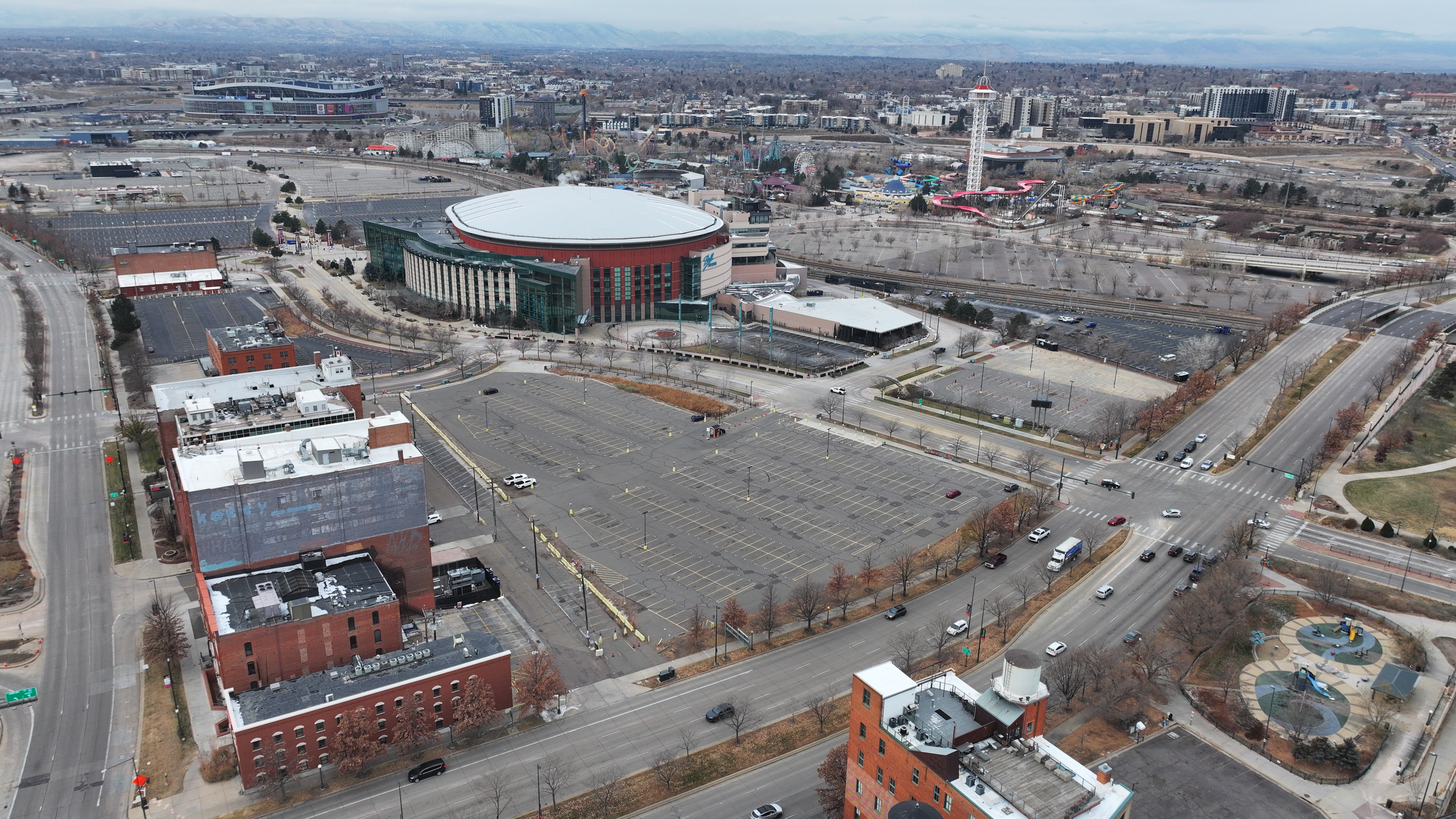
Kroenke Sports & Entertainment is now planning an even larger transformation around Ball Arena. The roughly 50-acre site west of downtown is currently dominated by surface parking lots. KSE plans to convert that land into a long-term mixed-use district built in phases over several decades.
Matt Mahoney, SVP at KSE, said the development is organized around three primary zones. The first is an arena district focused on entertainment uses near the venue. The second is a park district centered on residential development with open space. The third is a transit-oriented district near the site's rail connections that could eventually include high-rise housing.
Mahoney said the arena district will likely be the first phase and could take 5 to 10 years to develop. Phase 1 will also create a pedestrian bridge over Speer Blvd to connect Lower Downtown directly to the arena site, improving safety and access between the arena and surrounding neighborhoods.
Other elements under consideration include a hotel and a smaller venue with approximately 5,000 seats designed to complement the arena.
"We want people experiencing the district 24 hours a day" said Mahoney.
Mahoney also noted that the 5,000-seat venue would allow for additional performance and events that can complement larger events in the main arena, in addition to a hotel that could be similar to the Rally Hotel and serve as self-expression of the team and Denver for visitors.
Denver Summit FC
Denver Summit FC is pursuing a similar district concept around its planned women's soccer stadium near Santa Fe Yards. Rob Cohen, the team's controlling owner, said the project represents the largest investment ever made in a women's professional sports franchise.
Historically, women's teams often rented stadiums owned by men's teams, meaning much of the revenue flowed elsewhere. Cohen said the goal is to fundamentally change that model.
"If you invest in women the same way you invest in men, you can get the same kind of results" said Cohen.
The team evaluated hundreds of potential sites before selecting the Santa Fe Yards area. While the roughly 16-acre site is constrained, Cohen said its proximity to downtown and surrounding neighborhoods was a major advantage. The development is also intended to help reconnect neighborhoods separated by highways.
The project will include a stadium designed to sit within a park-like setting and take advantage of mountain views. Transit access is a key component of the plan, and the development will focus heavily on retail and entertainment uses, with additional residential and hotel opportunities under consideration.
Burnham Yard
The Denver Broncos are also exploring a major stadium district of their own.
The team has identified Burnham Yard, a historic rail yard south of downtown, as its preferred site for a future stadium development.
Tim Aragon, general counsel for the Broncos, said stadium decisions often occur around the 30 year mark as teams evaluate aging facilities and future needs. Burnham Yard stood out compared with other potential locations, including Lone Tree, because of its historic character and urban setting. The site includes a locomotive shop and turntable that could become part of the district’s identity.
“We’re leaning into the railroad history of the site” Aragon said.
The Broncos are evaluating a development program that could include 5 million to 7 million square feet of mixed use development surrounding the stadium. Office, retail, housing and open space are all being considered, though Aragon said the specific mix has not yet been finalized. The project could also involve joint ventures with development partners.
Panelists said projects like Burnham Yard could also spark additional investment nearby. Ament noted that tools such as urban renewal plans and tax increment financing can help support surrounding development and infrastructure improvements.
Looking Ahead
Across all of the projects discussed, panelists agreed that the success of modern stadium districts will depend on how well they function without a game taking place.
Looking ahead, they expect Denver’s sports venues to become anchors for neighborhoods rather than isolated buildings surrounded by parking. By the next decade, several panelists predicted the city could be widely recognized as one of the country’s leading sports destinations.
To keep track of these projects and more major projects that will change Denver's urban fabric, visit our Major Project Portal here.