Burnham Yards
About This Project
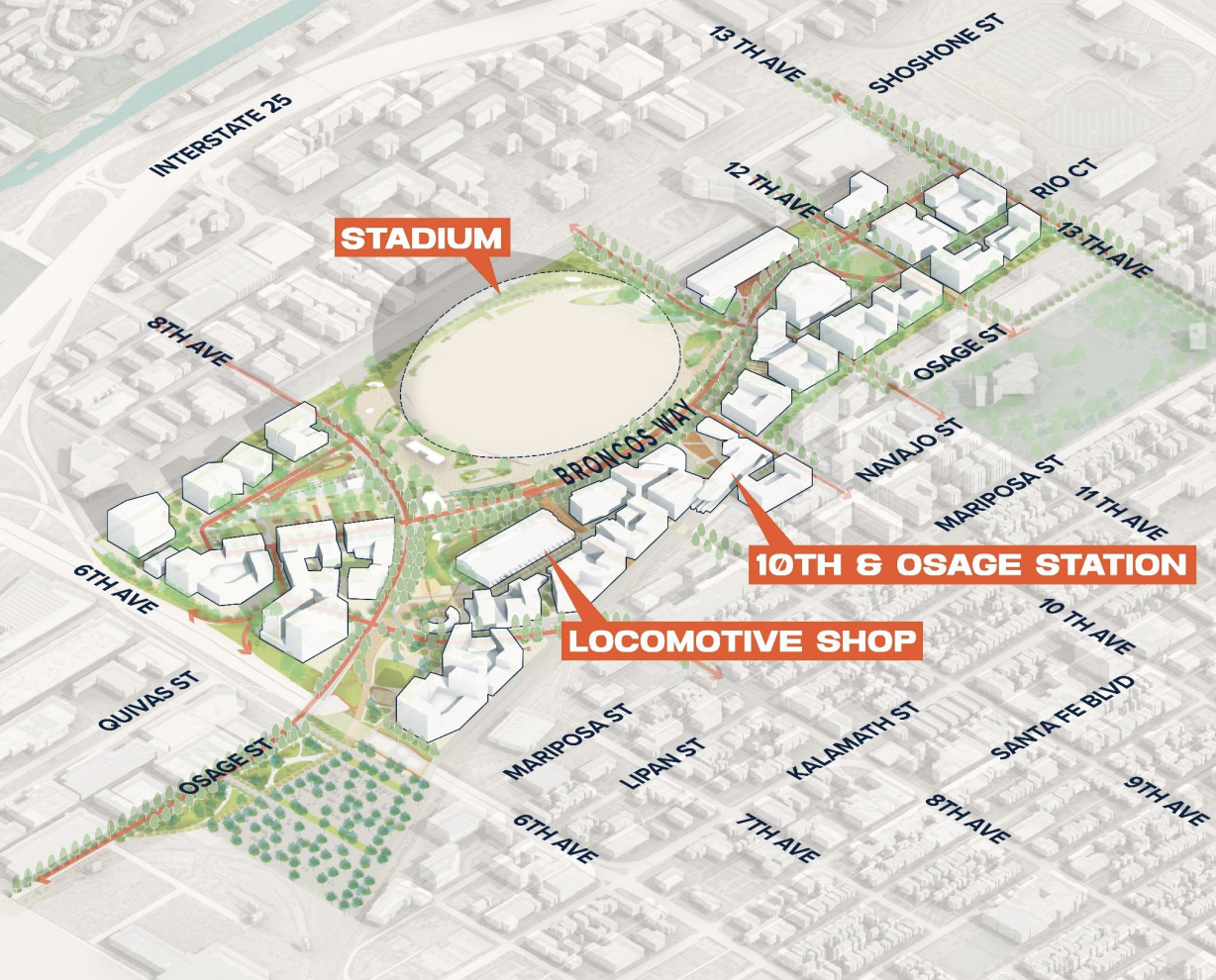
Burnham Yard is a 58-acre former railroad yard located just southwest of downtown Denver, near the La Alma-Lincoln Park neighborhood. The site was used for rail operations for decades before becoming inactive in 2016, leaving one of the largest underutilized parcels near the city center. The property is now the focus of a major long-term redevelopment effort led by the City of Denver, with plans to transform the rail yard into a dense, mixed-use urban district. The vision centers on reconnecting surrounding neighborhoods, improving mobility, and introducing new housing, jobs, entertainment, and public open space on land that historically functioned as a physical and psychological barrier. Burnham Yard gained national attention after the Denver Broncos announced plans to pursue a new, privately funded NFL stadium on the site. The proposed stadium would include a retractable roof and be surrounded by a broader mixed-use development featuring retail, hospitality, residential, office space, and public gathering areas. The stadium is envisioned as an anchor for a year-round destination district rather than a standalone venue. At the same time, the city is advancing a Burnham Yard Small Area Plan to guide development through community input, with a focus on infrastructure, housing affordability, environmental remediation, and minimizing displacement. If built out as envisioned, Burnham Yard would represent one of the most significant urban redevelopment projects in Denver’s history.
Updates
Community Advisory Committee Meeting #3
Last night’s third Burnham Yard community meeting centered on the Broncos’ updated plans for a future stadium and surrounding development, with parking and tailgating as major points of discussion. The team emphasized that early phases will maintain substantial surface parking similar to Empower Field, including over 1,000 spaces reserved specifically for tailgating, while later phases will transition to structured parking. Updated renderings also showcased expanded green spaces, improved pedestrian connectivity, and a new parkway designed to enhance the game‑day tailgating experience, reflecting ongoing adjustments driven by community feedback
Broncos Complete SRM Concrete Plant Purchase
The Denver Broncos have purchased SRM Concrete’s roughly 10 acre site near Burnham Yard for about $55 million, securing a key site for the proposed stadium district.
Broncos Annouce Architects for the stadium & master planning
The Denver Broncos have selected the architectural teams that will shape both their proposed new stadium and the surrounding mixed-use district at Burnham Yard, according to reporting from The Denver Post. Kansas City-based Manica Architecture will lead the design of the retractable-roof stadium, while Denver-based Tryba Architects will oversee the master plan and design of the broader stadium-anchored entertainment district. The firms were selected earlier this year but were publicly identified Saturday, as first reported by The Post.
Burnham Yard Community Information Meeting
At a Feb. 12 community information meeting hosted by the Denver Broncos at the La Alma Recreation Center, the team shared the latest on its Burnham Yard area plan and gathered direct input from residents on the proposed new stadium and mixed-use district. Attendees heard about the guiding principles, project schedule and the broader vision for a development that preserves local history and serves the neighborhood beyond just game days, while Broncos President Damani Leech emphasized the team’s commitment to listening and incorporating community feedback as planning continues. Residents packed the event, voiced excitement and concerns, and responded quickly to a survey on priorities such as open space, development impacts and hopes for the area. Details about the stadium itself, including capacity and design renderings, remain undetermined, and the process is still in early stages with community voices playing a key role in shaping the plan.
Community Advisory Committee Meeting #2
The Dec. 10 Community Advisory Committee meeting for the Burnham Yard Small Area Plan focused on confirming the project vision, refining guiding principles and ensuring equity is clearly defined and embedded throughout the plan. The meeting opened with storytelling from Dr. Lucha Martinez de Luna, who emphasized the risks of cultural erasure and displacement tied to redevelopment and challenged the group to define success by whether current residents can stay and be represented. The project team shared engagement results, including 350+ survey responses and 340+ open house attendees, with top themes including displacement, property taxes, affordable housing, mobility, culture and sustainability. Draft language for an equity definition, vision statement and six guiding principles was presented for discussion. CAC members broadly supported the direction but called for stronger, more explicit commitments to anti-displacement strategies, affordable homeownership, generational wealth building, prevailing wage jobs, Indigenous recognition, environmental healing and regenerative design, multimodal connectivity beyond stadium needs and integration with surrounding neighborhoods. Members questioned “world-class” branding, urged removal of “district” language and emphasized that iconic design must serve existing residents rather than overshadow them.
Public Open House 1
The November Burnham Yard Small Area Plan boards introduced the project area, history and key planning themes while gathering community input. Materials grounded the process in Indigenous land acknowledgment, railroad and industrial history, redlining and displacement, and asked participants to define what equity should mean in a redeveloped Burnham Yard. Existing conditions highlighted a strong industrial job base with low vacancy, rising office demand, growing multifamily development and zoning constraints that limit mixed use flexibility. Environmental boards emphasized flood risk, stormwater upgrades, urban heat island conditions, limited tree canopy and the need for soil and groundwater remediation, alongside opportunities to expand trails and open space connections. Mobility materials identified major barriers including I 25, rail lines and the South Platte River, and outlined priorities such as safer crossings, stronger regional trail links, improved multimodal hubs and a more connected local street grid. Overall, the boards framed the central tension between growth and preservation, connectivity and barriers, and redevelopment and environmental repair.
Community Advisory Committee #1
The Oct. 21 Community Advisory Committee meeting for the Burnham Yard Small Area Plan focused on aligning around the planning process, reviewing existing conditions and beginning a shared 2040 vision for the site. The project team presented findings across environmental resilience, economic growth, community livability and connection and access, highlighting key opportunities such as regional trail connections, a strong industrial job base, adaptive reuse of historic rail assets and transit access, alongside challenges including soil contamination, fragmented street connectivity, land use conflicts and flood and stormwater constraints. In facilitated discussion, members outlined a long term vision centered on preserving cultural identity and Indigenous history, delivering living wage jobs and small business support, protecting affordable housing, improving multimodal access that avoids neighborhood disruption, expanding open space and tree canopy, cleaning the river and remediating the site, and ensuring the area becomes a year round mixed use neighborhood rather than solely a stadium district. The committee also requested clearer definitions of equity and community benefits, better coordination between the Small Area Plan and Community Benefits Agreement processes, and greater transparency around public funding and state involvement, with additional materials and clarifications to be shared before the next meeting.