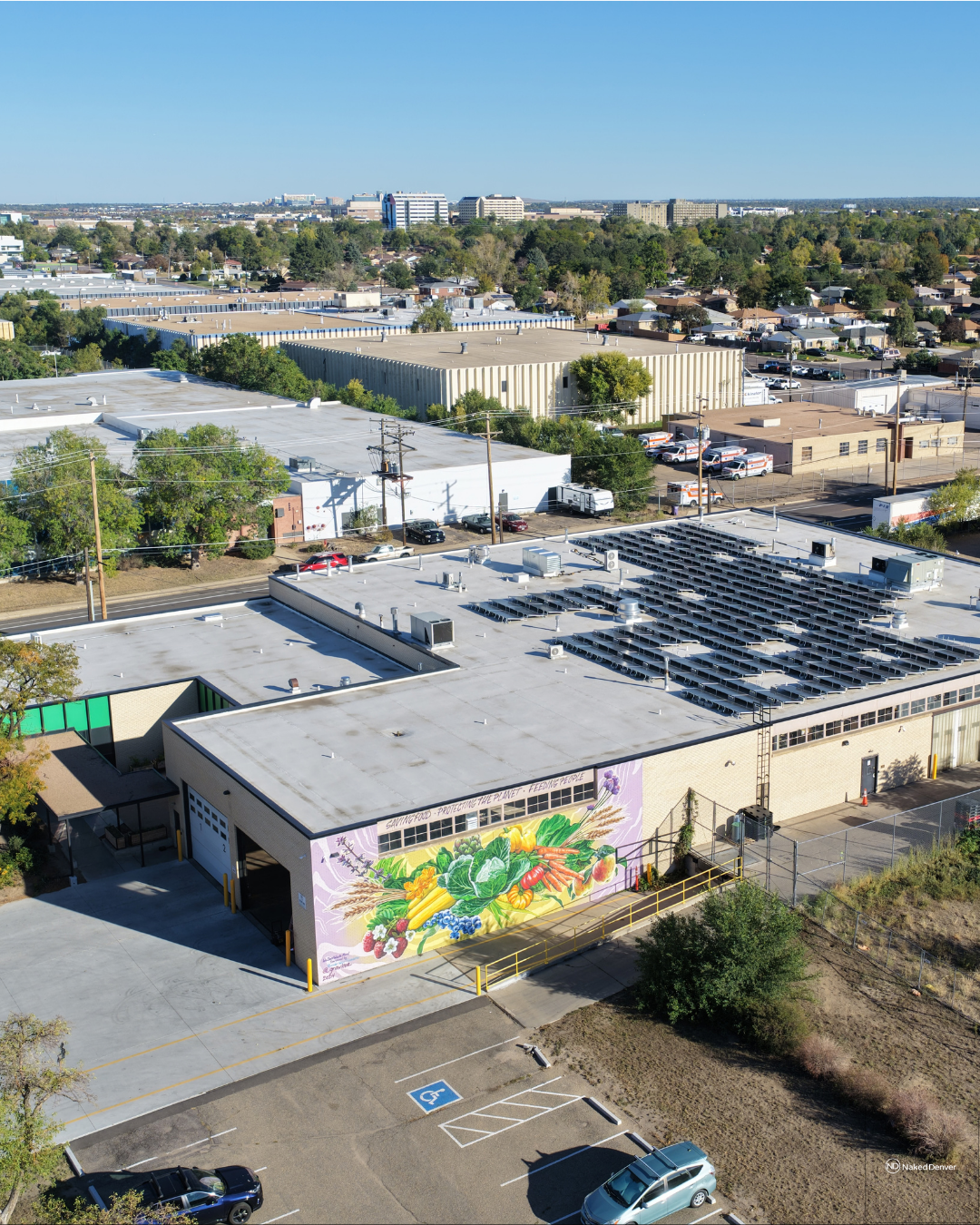
6090 E. 39th Avenue, Denver
We Don’t Waste is planning another major expansion of its Denver operations, just a few years after moving into its current Food Recovery Hub in the North Park Hill neighborhood.
Plans submitted to the City of Denver call for an approximately 6,824-square-foot addition to the nonprofit’s facility at 6090 E. 39th Avenue. The project would expand food storage and warehousing capacity, enlarge loading and distribution areas, add covered outdoor distribution space and introduce a new community garden and greenhouse.
The expansion represents the latest chapter in a Denver nonprofit that started on a much smaller scale. We Don’t Waste was founded in 2009 by Arlan Preblud, who initially began collecting surplus food from restaurants, caterers and other food businesses in his Volvo station wagon and delivering it to organizations serving people in need. Within its first several months, the organization had already recovered hundreds of thousands of servings of food.
Over the following years, We Don’t Waste grew into one of the Denver metro area’s larger food recovery organizations. Its model focuses on collecting high-quality food that would otherwise go unused and redistributing it at no cost through food pantries, shelters, schools, soup kitchens and other hunger-relief organizations.
The nonprofit also operates Mobile Food Markets that bring fresh food directly into communities, expanding its reach beyond the organizations receiving deliveries from its warehouse. That growth eventually led We Don’t Waste to establish its current Food Recovery Hub at 6090 E. 39th Avenue in North Park Hill in 2023. The roughly 30,000-square-foot facility represented a significant expansion from its previous distribution center and consolidated warehousing, food sorting, distribution and administrative operations under one roof.
Now, roughly three years after moving into the building, We Don’t Waste is already looking to add more capacity. The proposed 6,824-square-foot addition would increase the size of the existing approximately 28,292-square-foot building to roughly 35,000 square feet. Much of the new space would support food storage and warehousing, including additional and expanded walk-in freezer and cooler capacity along with more dry goods storage. Loading and distribution operations would also expand. Plans call for an enlargement of the existing loading dock area to increase capacity and improve the movement of food into and out of the facility.
Additional covered outdoor distribution areas are proposed to create dedicated space for food distribution to individuals and nonprofit partners. The site plan also identifies an approximately 5,000-square-foot marketplace and food pantry expansion as part of the larger reconfiguration of the property.
One of the more unique pieces of the project is a proposed community garden and greenhouse area along the southern portion of the site. Food grown in the gardens and greenhouse would not be sold. Instead, produce would be distributed to the community and We Don’t Waste’s nonprofit partners, adding another source of fresh food to the organization’s existing recovery and distribution network.
The garden would also serve an educational role, providing opportunities for community members to learn more about the food cycle and how food can be grown and harvested in an urban environment. Plans show several garden areas surrounding the proposed greenhouses, along with new landscaping, internal pedestrian paths, a paved plaza and outdoor seating. Other improvements include expanded loading infrastructure, additional parking and new pedestrian connections throughout the property.
The project is being designed by Naos Design Group, which submitted the formal Site Development Plan to Denver in October. The proposal remains under city review.
The expansion comes at a notable point in the organization’s history. What began with surplus food being collected from Denver restaurants in a station wagon in 2009 has grown into an operation serving communities across the metro area from a dedicated North Park Hill food recovery hub. If approved, the latest expansion would give We Don’t Waste additional capacity to recover, store and distribute food while turning more of its 39th Avenue property into a space for direct food access, urban agriculture and community education.