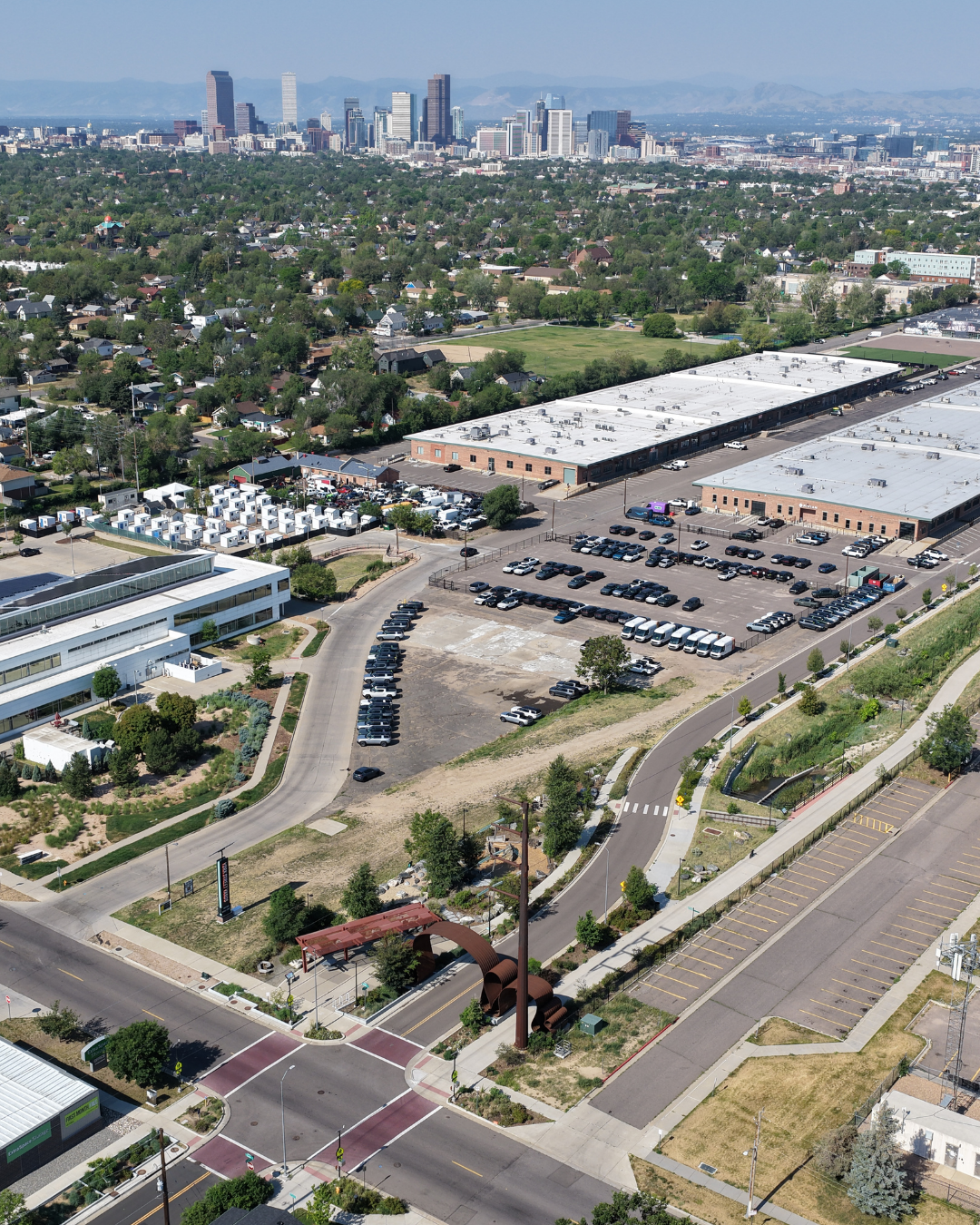
3897 N Steele St
A concept plan has been submitted to the City of Denver for a 92-unit, LGBTQ+-affirming affordable senior housing development at 3897 N Steele St in Clayton — the latest step forward in a project that supporters say would be Colorado's first of its kind.
The four-story building, designed by SAR+ Architects for Philadelphia-based developer Pennrose, would total 87,220 square feet at 52 feet in height. Beyond the 92 age-restricted affordable apartments, the project includes 3,140 square feet of ground-floor office space earmarked for a future tenant, 50 on-site parking spaces, and resident amenities including a community room, fitness center, activity rooms, and 48 spaces of enclosed and fixed bike storage.
The project traces back to a land swap made possible by a rezoning of the broader York Street Yards campus. In October 2024, Denver City Council voted 9-2 to rezone York Street Yards and its adjacent parcels to I-MX-5 — an industrial mixed-use designation allowing up to five stories. That vote cleared the path for local developer and adjacent property owner Fred Glick to exchange his half-acre green space at 3840 York St, which he calls the "Quad," with York Street Yards owner ScanlanKemperBard for the 1.36-acre Steele Street site where the new building will rise. The rezoning drew over 100 letters of community support, including endorsements from the Clayton neighborhood association.
"You don't get 105 people positively supporting anything that comes, usually, before council," said Councilman Darrell Watson, who represents the district.
The 9-2 vote wasn't without friction — council members Shontel Lewis and Amanda Sandoval opposed the rezoning, citing concerns that the broader I-MX-5 designation opened up the York Street Yards campus to future residential development without guaranteed community input on what that might look like.
The housing initiative is being developed in partnership with The Center on Colfax, the largest LGBTQ+ community center in the Rocky Mountain region. The Center plans to operate a satellite location within the building as part of its "West of 50" program, which addresses housing, safety, and mental health needs among LGBTQ+ seniors. Center CEO Rex Fuller has cited data from a 2018 AARP study indicating that a majority of LGBTQ+ seniors fear being unable to live openly in traditional senior housing environments — a gap this project directly aims to close.
The 1.36-acre site currently serves as surface storage and parking for Rivian vehicles, a tenant at York Street Yards. SKB purchased York Street Yards — originally a pair of World War II-era U.S. Army medical depots — in 2018 for $77 million and has invested approximately $160 million into the campus since. Today it is home to more than 30 tenants including Rivian, Skiptown, Cohesion Brewing, and Topo Designs, making it one of Denver's most cited examples of successful industrial adaptive reuse.
The concept plan was filed under case number 2024-CONCEPT-0000111. The project will seek Low Income Housing Tax Credits (LIHTC); if awarded, it will enter Denver's Affordable Housing Review Team (AHRT) program and target full permitting within approximately 12 months. The proposal also takes advantage of two Denver Zoning Code affordable housing incentives: a permit fee reduction and a commercial street-level linkage fee exemption.
The concept plan reflects a refined iteration of the project — the unit count has grown from the originally proposed 75 to 92 as the design has evolved. Formal site development plan approvals remain ahead.
The proposal adds to a broader cluster of investment reshaping this stretch of Clayton. As York Street Yards continues to fill out and draw attention, the corridor along 39th Avenue between York and Steele Streets is emerging as one of North Denver's more dynamic mixed-use nodes — and this development would layer in something the district has not previously had: deed-restricted senior housing built explicitly to serve a population that has historically found little safe harbor in the affordable housing supply.