2026 Outlook: 5 Companies Answer the Same 8 Questions
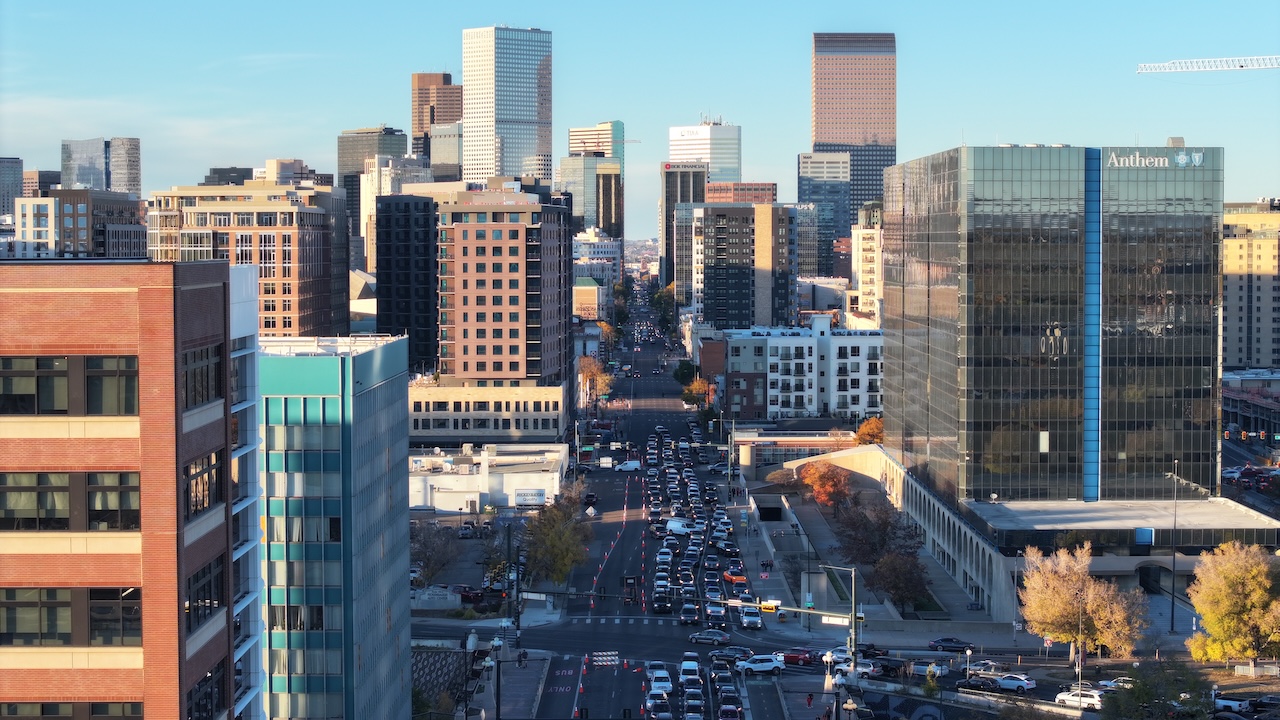
As Denver’s real estate market enters 2026, the outlook is less about consensus and more about conviction. We asked five local real estate leaders the same set of questions about where the market is headed: Haroun Cowans, CEO of Goshen Development; Kenneth Monfort, newly appointed CEO of Monfort Companies; Doug Elenowitz, co-founder and principal at Trailbreak Partners; Sean Campbell, CEO of Formativ; and Andy Cullen, managing broker at Tributary Real Estate. Their answers don't always align, and that's part of the value.
Together, the responses reflect a market still working through a reset, with opportunity emerging unevenly across asset classes, submarkets, and strategies.
1. Which product type or asset class in the Denver market do you expect to outperform in 2026, and why?
Trailbreak Partners
High-quality, well-located Class A and A-minus assets that can be acquired at a reset basis are positioned to outperform, particularly late-stage lease-ups or lightly stabilized 2021–2025 vintage properties. Supply pressure is easing. Denver completions were down sharply year-over-year, and the construction pipeline is clearly tapering heading into 2026. This sets up a more favorable rent-growth environment in 2026–2027 as new supply rolls off.
Improvement in an oversupplied market like Denver will likely show up first as less-negative rent trends and improving leasing velocity, rather than an immediate rebound. Assets that are well-positioned to capture demand as concessions normalize should benefit most from that shift. Ultimately, the strongest outperformance opportunity in 2026 will be where investors can combine an attractive basis with an operational rebound.
Formativ
We still expect to see pockets of distress across residential, office and retail as the market works through oversupply and capital resets. That said, new residential development is likely to rebound first. As deliveries slow and existing supply is absorbed, fundamentals should start to tighten, especially in well-located urban and in-the-path-of-growth submarkets. We expect rent growth to show up toward the back half of 2026.
Goshen Development
Rental housing is expected to be the top-performing asset class in Denver in 2026, with particular strength in single-family rentals. Rental growth in that segment has remained durable, and the slowdown in new construction inventory continues to support demand.
Toward the latter part of 2026, early signs of recovery should begin to emerge in multifamily, as the current delivery cycle works through the market and the forward pipeline remains limited. Senior housing and data centers are also asset classes to watch, driven by long-term demographic and infrastructure demand.
Tributary Real Estate (TRE)
The office sector will certainly be the winner. The office market has now moved past its lowest point in this post-pandemic cycle in Denver, and with return-to-office mandates taking effect, we expect momentum to continue building. We are still seeing a flight to quality, and many companies are looking to expand their footprint as employees return and the need for collaboration spaces grows. At the same time, we are already seeing signs that multifamily and industrial are slowing.
Monfort Companies
Well-located experiential retail and hospitality will lead the market. Projects that consistently attract people, not just for weekends or special events, will stand out. Downtown remains uneven, but momentum is returning as key public-realm investments are completed. The real winners will be walkable, mixed-use environments that combine food, beverage, programming and community activation, and that can operate profitably even before a full recovery takes hold.
2. What is one misconception about the Denver real estate market heading into 2026 that you think needs correcting?
Trailbreak Partners
It is fair to say that Denver’s prominence has cooled from the outsized growth years, with the labor and population growth that defined the last cycle having moderated. However, that does not mean the opportunity has disappeared. Even with more moderate growth, the market continues to exhibit solid underlying demand.
Formativ
There is still a narrative out there that downtown Denver has a major health and safety issue, and that just does not match what we are seeing day to day. Downtown feels more vibrant and active than it has in years, with more people back in the office, stronger foot traffic and renewed energy across key corridors.
Goshen Development
I think most people actually have a pretty good grasp of where we are today. The bigger misconception isn’t so much about 2026 itself, but about what comes after.
There’s been a lot of focus on recent deliveries, slower rent growth and some of the lagging data from last year and this year. That’s all important, but I don’t think enough attention is being paid to what the market looks like 24 to 36 months out. We’ve had an uptick in deliveries, but the forward development pipeline is much smaller.
The real question is what that means for inventory, affordability and future rent growth. Development takes time, and if we’re only looking at what’s right in front of us, we risk being unprepared for the next phase of the cycle.
TRE
A common misconception heading into 2026 is that office rents in Denver are down across the board. In reality, that is not the case. Rents in both newer and older buildings have largely held steady, despite some of the buildings trading at deep discounts from prior purchase prices. Many of these new landlords are making investments in their buildings while holding or even pushing rents higher than previous levels. We expect this trend to continue throughout 2026.
Monfort Companies
That Denver functions as a single market. It doesn’t. Submarkets like Cherry Creek, LoHi, RiNo and select downtown pockets operate more like different cities than parts of the broader CBD. Micro-location, tenant mix and activation matter more than ever, particularly in areas where perception still lags underlying fundamentals.
3. How do you see construction costs and labor availability evolving in Denver this year, and how will that impact new development and supply?
Trailbreak Partners
Construction costs are expected to remain steady to modestly higher, rather than meaningfully declining. While certain material and trade costs have come down, labor availability remains constrained, with ongoing difficulty hiring skilled trades and workforce shortages continuing to impact project timelines. The practical result is fewer new starts, more delayed or phased projects, and continued creativity in capital stacks to make deals pencil. These dynamics support the view that the supply wave is already ebbing, as high costs and tighter execution hurdles are naturally limiting new development.
Formativ
We expect construction costs and labor availability to stay relatively flat through 2026, mostly because confidence in new development is still limited. Once confidence returns and more projects move forward, we expect more typical annual cost increases in the 2%-4% range.
Goshen Development
Construction cost data remains mixed. A slowdown in development activity has eased some pricing pressure, but labor availability continues to be a challenge.
As major projects reach completion, the bigger concern becomes retaining skilled trades and keeping workers engaged during slower periods. Cost stabilization helps, but maintaining a strong construction workforce is critical to ensuring Denver can respond efficiently when development activity increases again.
TRE
Construction costs in Denver are expected to remain high this year, with tariffs, labor shortages and material costs continuing to put pressure on project budgets. While costs may not rise as sharply in 2026, we also don’t expect them to come down in a meaningful way.
Monfort Companies
Construction costs are still rising, but the pace is moderate compared to earlier cycles. Labor availability has been steadier than many expect, though operating labor pressures remain real, especially in hospitality, with Denver’s minimum wage increasing on January 1, 2026. These dynamics are driving fewer speculative starts, more phased development and a strategic emphasis on adaptive reuse where economics and site potential align.
4. What major risk do you think Denver real estate stakeholders are underestimating as we enter 2026?
Trailbreak Partners
A key risk that is being underestimated is the refinancing wall colliding with the reality of effective rents, particularly given the added uncertainty around the impacts of Proposition 1090. Even as headline occupancy begins to improve, many properties are still relying on concessions to maintain occupancy, which can keep effective rents and NOI below expectations at a time when lenders are underwriting more conservatively. Rents remain down year-over-year, and concessions are elevated, even as we’re seeing record absorption and tightening vacancy. While this feels like a turning point, the near-term impact remains challenging. Layer in higher refinancing costs, reduced bank appetite and unanswered questions around how 1090 ultimately affects operating costs and investor behavior, and while distress won’t be everywhere, where it does emerge, it’s likely to matter.
Formativ
The biggest risk is broader capital market confidence and overall macroeconomic stability. Inflation trends, employment data, credit performance and the number of assets heading back to lenders will all shape how 2026 plays out.
Goshen Development
As I mentioned before, I think the greatest risk is underestimating the longer-term outlook. Current compression and slower activity can create the impression that these conditions will persist, but market cycles rarely hold still.
Without projecting 24 to 36 months ahead, stakeholders risk being unprepared for future constraints. That challenge becomes even more pronounced as Denver works to attract workforce talent and new businesses. A short-term lens can obscure structural issues that resurface quickly once momentum returns.
TRE
A key risk heading into 2026 is Denver’s growing perception – and at times reality – of being less business-friendly than competing cities. The regulatory complexity, high taxes, lack of affordability for both housing and living, combined with policy uncertainty in the future, are increasingly forcing companies choose to locate or relocate to different markets. The risk is not one specific policy, but the cumulative impact of how Denver compares to its peers in the minds of executives considering the city as a home for their business, both locally and statewide.
Monfort Companies
A prolonged grind in fundamentals while debt remains restrictive. Assuming rates will fall quickly and refinancing will be easy can create serious exposure, especially for assets with near-term maturities. National guidance is clear: refinancing pressure is a real CRE credit issue, and locally it shows up through leverage constraints, reserve requirements and disciplined underwriting.
5. How are local capital markets and lending conditions in Denver changing the way deals are being structured or underwritten?
Trailbreak Partners
From a capital markets standpoint, underwriting has shifted more heavily toward effective rents after concessions and higher economic vacancy assumptions, which makes sense in a renter-favorable environment like Denver’s is today. On the debt side, traditional bank construction lending has become less available, pushing sponsors toward debt funds, non-bank lenders and more bespoke capital solutions. Bridge-to-agency execution remains one of the more practical paths in multifamily, given the depth and consistency of agency takeout and the sector’s share of the overall CRE debt market.
Formativ
For new ground-up development, equity is still the hardest part of the capital stack. On the debt side, local banks and alternative lenders are active, but terms clearly favor the lenders, with more conservative underwriting, higher spreads and tighter covenants. This puts more emphasis on smart deal structuring, strong sponsorship and projects that show clear long-term value instead of short-term speculation.
TRE
Banks are largely not lending into Denver’s downtown assets, and the lack of equity chasing these deals is forcing sellers to offer historically low pricing. In 2026, we expect lenders to remain cautious, with tighter underwriting, lower leverage, recourse loans and a continued focus on stabilized assets. This environment will continue to require deals to be structured with more equity, creative capital stacks or seller support, favoring buyers with patient capital despite attractive pricing.
Monfort Companies
Two major shifts stand out. First, lower leverage and higher equity requirements, especially for assets with income volatility like hospitality, transitional retail and office. Second, more creative structures — preferred equity, rescue capital, seller financing, earnouts and milestone-based funding tied to leasing or performance. The market is rewarding sponsors who can operate and execute, not just transact.
6. Are there specific submarkets or neighborhoods in Denver you believe are being overlooked heading into 2026?
Trailbreak Partners
We tend to like infill and urban submarkets, which is a bit contrarian right now, but we believe in the city long term. The reality is that it’s far more challenging—and more expensive—to build in urban Denver, and that naturally limits future supply. Over time, that constraint tends to work in favor of well-located existing assets.
From a submarket perspective, Five Points, Capitol Hill and Cherry Creek are investment liquidity hubs and are leading the metro area’s supply slowdown, with materially fewer units slated for delivery compared to prior years.
Formativ
Downtown Denver continues to be overlooked despite improving fundamentals and long-term positioning. We also see opportunity in South Denver and the first-ring suburban market where infrastructure, connectivity and demographic trends support continued growth.
Goshen Development
Arapahoe Square and Five Points remain among the most overlooked submarkets. Located adjacent to the Central Business District, both areas offer high-density zoning, underutilized sites and significant opportunity for pedestrian-oriented development.
A clear disconnect still exists between downtown and these neighborhoods. As residential investment returns to the CBD, success will depend on improving connectivity—across major corridors like Broadway and Lincoln—and aligning infrastructure, transportation and public realm investments.
When Arapahoe Square and Five Points are meaningfully connected to downtown, they can absorb much-needed housing while enhancing vibrancy and preserving the character that defines each neighborhood.
TRE
Downtown Denver’s office market, particularly the CBD near the Capitol, is being overlooked heading into 2026. While perceptions remain negative post-pandemic, fundamentals and activity have improved meaningfully. This disconnect between perception and reality is creating opportunity, especially given current pricing and the area’s long-term office demand potential.
Monfort Companies
Yes, the “in-between” neighborhoods that sit near established nodes but still trade at a discount. Places like the ballpark area benefit from proximity, connectivity and existing energy, but still require intentional placemaking to unlock their potential. These aren’t easy wins, but they offer basis, runway and upside for patient, hands-on investors.
7. What is the single most important signal or data point you are watching in early 2026 to guide decision-making in Denver?
Trailbreak Partners
The single most important indicator we’re monitoring is concessions, both in terms of their depth and how widespread they are, alongside trends in effective rents relative to deliveries and absorption. The focus is on identifying when the pace of decline begins to slow, which typically occurs before growth returns. In Denver, we expect the turn in the cycle to show up first through concession burn-off as the construction pipeline continues to taper.
Formativ
Inflation is still the key signal we are watching, along with broader economic indicators that point to softness or stabilization. Employment trends, consumer confidence and credit performance all influence how aggressively capital comes back into the market.
TRE
The single most important data point we are watching is the net absorption in the Denver office market. Absorption shows whether tenants are actually leasing space and whether overall availability is starting to decline. For tenants, this is especially important. As absorption improves, it signals the market is beginning to normalize. Tracking this data point helps tenants to time long-term lease decisions to capture the best possible economics and flexible lease terms before leverage begins to shift back to landlords.
Monfort Companies
The cost of capital relative to real income growth — specifically where SOFR and Treasuries settle and how lenders translate that into proceeds. That ultimately determines what clears the market. On the ground, the simplest confirmation is consistent foot traffic and repeat visitation in the urban core, not one-off event-driven spikes.
8. What was your most meaningful win in 2025?
Trailbreak Partners
2025 was a challenging year by any measure. While we expected a supply storm this year, the depth, breadth and duration were all more intense than had been forecasted. In this environment, staying disciplined and focused on operations became critical. A big part of the year was about managing risk, preserving flexibility and creating opportunities for value capture rather than forcing growth. In many ways, successfully buying time to work through a disrupted market was itself an achievement.
That said, we did have some meaningful wins. We successfully refinanced out of two construction loans—one on a hotel in San Antonio and another on an apartment project in the Highlands that delivered in May—which meaningfully reduced near-term risk. In addition, we broke ground on KAIA, a 295-unit multifamily property at 8th and Lincoln. It will be a beautiful building in a great location and will be timed to deliver in late 2027 with lease-up in 2028—on the other side of the supply storm when very little new product is expected to be competing at that point.
Formativ
Our most meaningful wins in 2025 were continuing to move forward with development in Denver at a time when very few others are. We were excited to break ground on our project at 38th and Blake and Walnut and continue our progress at Denargo Market that reflects the kind of city-shaping investment we focus on.
Goshen Development
The most meaningful win in 2025 was the revitalization of 2550 Washington Street in Five Points, a project centered on affordable housing preservation, cultural activation and long-term sustainability.
Through a collaborative effort with Hope Communities, public agencies, residents and local stakeholders, the property was repositioned to protect affordability while strengthening its role as a neighborhood anchor. Reopening Fifth Coffee house as a pop-up concept through the summer of 2025 has provided engaging activation for this retail space.
Looking ahead to 2026, momentum from that project continues. Another major focus is moving 2000 Welton Street into construction, which would represent a significant milestone for Goshen and its partners. At the same time, work continues across other Five Points properties, along with an active acquisition strategy aimed at opportunities similar in spirit, projects that preserve housing access while supporting long-term neighborhood vitality.
TRE
Beyond navigating a challenging market, our most meaningful win in 2025 was launching the investment side of our business and introducing our new brand, TRE. This move allowed us to transition from advisory-only work to directly participating in opportunities we believe in, applying our market knowledge, underwriting discipline and long-term belief in the future of Denver. It was a strategic milestone that positions us to create value in multiple ways and better align our interests with clients as the market evolves.
Monfort Companies
Continuing to build an institutional-quality platform while staying committed to Denver’s urban core. We advanced multiple projects, strengthened capital relationships and positioned the company for long-term execution as the cycle turns. We’re playing a long game, curating the right operators, underwriting conservatively and investing through volatility where we believe the city ultimately wins.
Taken together, these responses point to a Denver real estate market that is no longer defined by a single narrative. Instead, 2026 is shaping up as a year of selective recovery, uneven opportunity, and disciplined execution. Supply pressures are easing, capital is more cautious, and underwriting assumptions are tighter across the board. The next phase will reward sponsors who understand micro locations, manage leverage carefully, and are willing to operate through a slower, more incremental recovery rather than chase a rapid rebound.
What stands out most is not broad optimism or pessimism, but conviction. Whether it is rental housing, office, experiential retail, or overlooked urban submarkets, opportunity in Denver remains very real for those aligned with the right product, basis, and time horizon. As the market continues to reset, 2026 looks less like a turning point and more like a proving ground.
Special thanks to Sidecar PR for assisting with outreach and helping collect responses from the participating companies.