As part of last nights 2026 State of the City address, Denver Mayor Mike Johnston has introduced the Mile High Line, an ambitious plan to connect seven of the city’s largest redevelopment areas through housing, transit, trails, parks and public investment.
The Mile High Line brings several projects that have previously been discussed separately under one citywide vision. The line would stretch from the former Park Hill Golf Course and National Western Center through downtown, Ball Arena, Burnham Yard, the current Empower Field site and Santa Fe Yards.
Together, the seven locations could support 20,000 new housing units, tens of thousands of jobs and hundreds of acres of parks and public spaces. Each site is located near existing rail service, with the city envisioning additional bicycle and pedestrian connections that would eventually link the developments together.
The seven Mile High Line destinations are:
Park Hill Park
Park Hill Park is a 155‑acre urban park in northeast Denver that occupies the former Park Hill Golf Course, which closed in 2018. In January 2025, the City of Denver completed a major land acquisition that made this site the fourth largest park in its system. The park opened to the public in summer 2025 and offers passive recreation such as walking trails, native plant areas supported by a mature tree canopy, scenic views, and a dog park.
Park Hill Park plays a central role in the Mile High Line because it anchors the city’s plan for connected, community‑driven growth. As the largest new park Denver has built in more than a century, it represents the shift from privately controlled green space to public space designed for everyone.
The mayor describes Park Hill as a world‑class park surrounded by transit, grocery stores, restaurants, and homes working families can afford, ensuring longtime residents of the historic neighborhood can stay rooted in their community. Within the Mile High Line vision, Park Hill Park embodies the commitment to equitable investment, walkability, and neighborhood‑serving development, helping knit together a future Denver that is connected, affordable, and open to all.
The National Western Center
The National Western Center sits in one of Denver’s oldest neighborhoods, rooted in deep Latino and Native American history, where two highways once cut communities off from investment and economic growth.
As the new campus rises, the city will hold 65 acres of the former site and is partnering with residents to envision new possibilities, including housing, public spaces, and renewed connections to Brighton Boulevard and nearby neighborhoods south of I‑70. With city ownership comes the ability to create opportunities private development never offered, such as community land trusts, shared ownership models, and neighborhood investment tools that allow longtime residents to remain and directly benefit from future growth.
Within the Mile High Line, the National Western Center is one of the seven anchor sites that form Denver’s new connected growth strategy. Because it sits on existing rail and includes large, city‑owned acreage, it provides a major opportunity to add affordable housing, expand transit‑oriented development, and repair historical disinvestment. Its inclusion ensures that the Mile High Line advances equity by directing investment to neighborhoods that have waited the longest, creating a community‑shaped redevelopment that keeps residents in place while knitting together jobs, transit, public spaces, and new homes across the entire corridor.
Downtown Denver
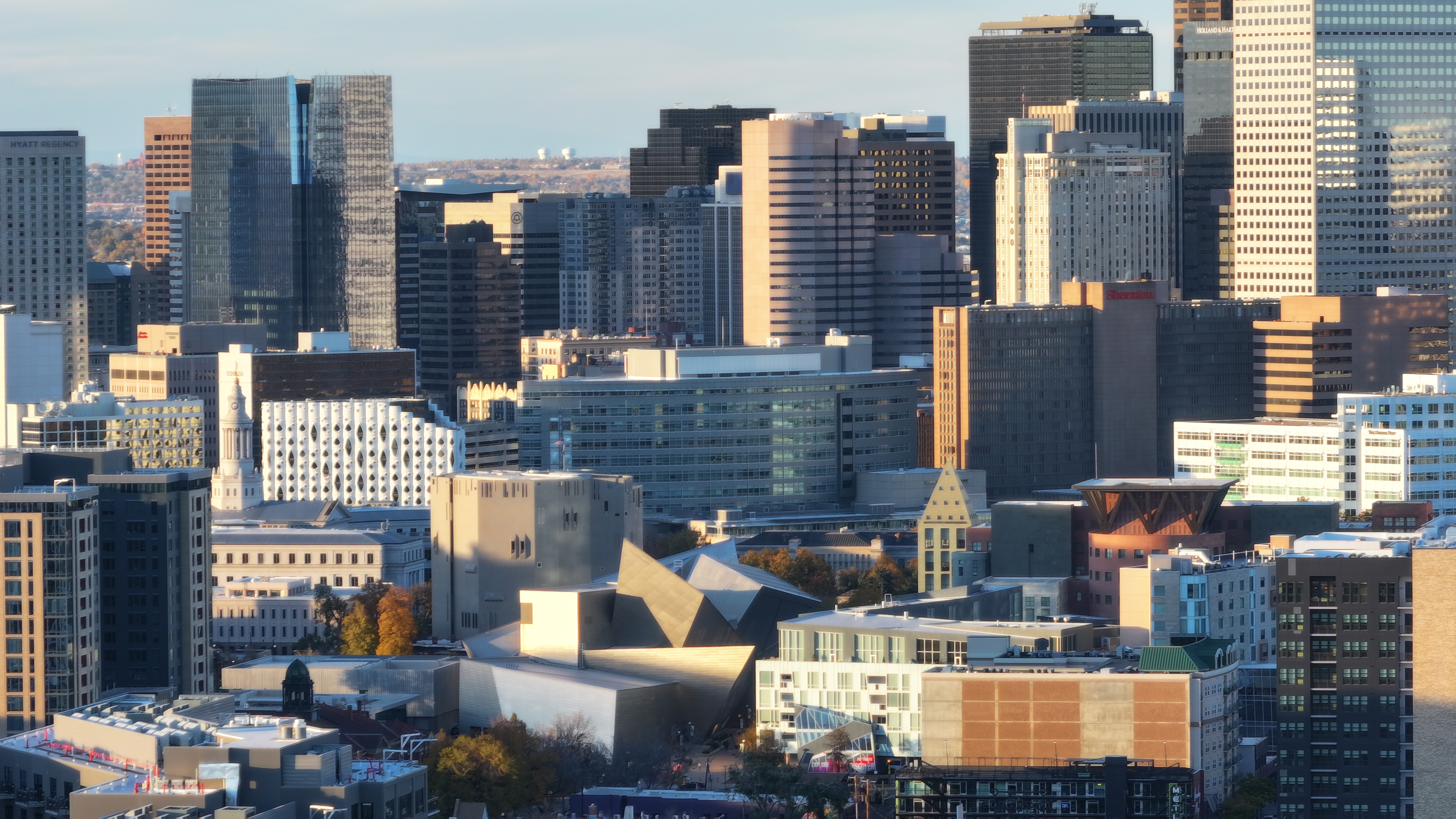
Downtown Denver has been undergoing a major revitalization focused on restoring its vibrancy and shaping it into a “downtown of the future.” The city fully reopened and rebuilt 16th Street end to end, re‑energizing it with art, music, shops, and visitors from around the world. Since 2025, downtown has welcomed more than 100 new businesses, added thousands of new homes in various stages of development, and hosted large-scale events including Pride, Outside Days, and massive World Cup watch parties.
With foot traffic returning to 90% of pre‑pandemic levels, downtown has become the city’s cultural and economic engine again, a place where local restaurateurs expand, small businesses thrive, and residents enjoy new opportunities to gather, celebrate, and belong.
As part of the Mile High Line, downtown represents one of the seven connected hubs driving Denver’s next decade of growth. The “next generation of downtown” includes the revitalized 16th Street corridor and new office‑to‑housing conversions, demonstrating how the Mile High Line strategy integrates jobs, housing, transit, and public space.
Downtown’s inclusion ensures the corridor has a strong commercial and residential anchor where walkability, transit access, and density work together to support a more connected and affordable city. By transforming underused buildings into homes and expanding local businesses, downtown helps deliver the Mile High Line’s core goals: creating equitable growth, increasing housing supply near transit, and strengthening the shared spaces that keep Denver connected to itself.
Ball Arena and River Mile
Ball Arena and the River Mile represent two major redevelopment areas positioned to reshape Denver’s urban core. The River Mile is an ambitious plan to transform the central waterfront area into a dense, walkable district with new housing, jobs, and public spaces.
Ball Arena, surrounded by significant underused land, is poised for reinvestment that will strengthen its role as a major entertainment and cultural anchor. Together, these areas are envisioned as vibrant, mixed‑use neighborhoods that bring people closer to transit, local businesses, and riverfront amenities.
Within the Mile High Line, Ball Arena and the River Mile serve as key nodes that extend the corridor’s connected, values‑driven growth strategy through the heart of downtown and its riverfront. Their redevelopment advances the Mile High Line’s goals by adding new housing near transit, improving walkability, and creating destinations that link seamlessly to surrounding neighborhoods.
As part of the seven‑site network, these projects help deliver the Mile High Line’s core commitments: equitable investment, increased density where transit already exists, and a future Denver where major civic and entertainment spaces are integrated with housing, jobs, and accessible public spaces.
Burnham Yard
Burnham Yard is a historic 150‑acre rail yard that has been fenced off from Denver for more than a century, separating neighborhoods and limiting development opportunities. Now, with plans to build a new Denver Broncos stadium on the site, Burnham Yard is being reimagined as a year‑round community asset filled with restaurants, housing, public spaces, and major civic events such as graduations and championship games. Its transformation marks a rare chance to open long‑restricted land, create new connections, and reshape the west side of Denver with spaces designed to serve residents every day rather than only on game days.
Burnham Yard is one of the Mile High Line’s most significant anchor sites because of its size, its strategic location on existing rail lines, and the once‑in‑a‑century development opportunity it creates. When the Broncos move to their new stadium, the current stadium site—Old Mile High—returns 85 acres of prime land to the city, allowing Denver to knit together West Denver neighborhoods with new housing, public spaces, and strong transit connections.
Burnham Yard’s redevelopment directly supports the Mile High Line’s goals: building density where transit already exists, expanding affordable housing, reconnecting long‑separated communities, and ensuring major civic investments are shaped with and for the residents who live nearby.
Old Mile High
Old Mile High refers to the 85 acres of land beneath the current Denver Broncos stadium, a site that will return to city ownership once the team relocates to its new stadium at Burnham Yard.
This land sits at a pivotal junction connected to Federal Boulevard, Sun Valley, and Westwood, and represents a once‑in‑a‑century opportunity for Denver to rethink how major civic land can serve neighborhoods every day. The city plans to begin a broad community‑driven process to determine how Old Mile High can support thousands of new homes, new public spaces, and stronger connections between long‑separated communities, ensuring the redevelopment reflects the needs and aspirations of residents who have historically been left out of these decisions.
Old Mile High is a crucial link in the Mile High Line because its redevelopment enables the city to reshape West Denver with housing density, transit access, and public spaces in one of the corridor’s most strategically connected areas. As one of the seven anchor sites, it directly supports the Mile High Line’s goals of building affordable homes where transit already exists and strengthening neighborhood connections that have been fractured for generations.
By returning significant acreage to community‑guided planning, Old Mile High helps ensure the Mile High Line grows in a way that is equitable, connected, and rooted in local voices—keeping West Denver open, affordable, and fully integrated into the city’s future.
Santa Fe Yards
Santa Fe Yards is envisioned as a vibrant, transit‑rich district already connected by light rail and rooted in the energetic South Broadway corridor. As the future home of the Denver Summit, it represents a key redevelopment opportunity where housing, mobility, and cultural activity can grow together. Positioned along established transit lines and anchored by active neighborhood life, Santa Fe Yards offers the city a chance to create a mixed‑use community that brings residents closer to jobs, entertainment, and reliable transportation.
Within the Mile High Line, Santa Fe Yards serves as one of the seven interconnected hubs that collectively shape Denver’s next decade of growth. Its location on existing rail infrastructure makes it central to the Mile High Line’s strategy of building density where transit already works, improving walkability, and strengthening connections across neighborhoods.
As part of the unified corridor, Santa Fe Yards helps deliver the Mile High Line’s core vision: equitable investment, thousands of new homes, reliable transit access, and community‑shaped development that keeps Denver affordable, connected, and open to everyone.
The Mile High Line brings together seven major projects under one shared framework, unified by what Mayor Johnston described as “the vision we have built that binds them together,” a promise that Denver’s next decade of development will be connected, affordable, and shaped by the people already living in these neighborhoods.
It is not a single rail line or continuous development, but a coordinated strategy built on existing light rail, with future bike and pedestrian paths linking each site. Johnston framed the Mile High Line as a housing, transportation, economic, climate, and equity strategy designed to place more homes near transit, build walkable neighborhoods, and use publicly controlled land to preserve long‑term affordability and community ownership.
That leverage is especially significant at the National Western Center and Old Mile High, where the city controls large tracts of land and is exploring tools like community land trusts, homeownership assistance, and neighborhood investment trusts. The city’s headline goal is to support 20,000 new homes across the seven locations, including world‑class spaces like Park Hill Park, which he described as “a world‑class park surrounded by transit, grocery stores, restaurants, and homes people can afford.” As Johnston put it, “A line is a connection between points… These points are already joined by rail.
We will join them by trail.” Whether the Mile High Line becomes a truly connected and equitable vision or simply a set of isolated developments will depend on securing affordability, public access, and community‑led benefits at every site so that neighborhoods “grow with their neighbors, by their neighbors, and for their neighbors.”