Denver Moves to Pause New Data Center Proposals
Denver officials announced plans to temporarily pause new data center proposals while the city reviews regulations governing electricity demand, water consumption and long term land use.
The pause would not apply to projects that are already approved or under construction. Instead, city leaders said it is intended to allow time to examine how future facilities should be evaluated as energy intensive infrastructure expands across the region.
Councilmember Darrell Watson said the city must balance economic development with environmental stewardship.
“Denver is a city that embraces innovation. We are also committed to protecting our environment,” Mr. Watson said. “Data centers use significant energy and water. We have a responsibility to manage their growth in our communities wisely and sustainably.”
A Significant Existing Footprint
Colorado already hosts dozens of operating data centers across multiple counties. Among the largest estimated annual electricity users:
-Kyndryl in Boulder County up to 22,188 megawatt hours per year
-JPMorgan Chase in Arapahoe County up to 19,379 megawatt hours
-Amazon in Arapahoe County up to 18,582 megawatt hours
-CoreSite in Denver County up to 18,200 megawatt hours
-JPMorgan Chase in Broomfield up to 16,000 megawatt hours
-Walmart in El Paso County up to 13,007 megawatt hours
-Flexential in Douglas County up to 12,992 megawatt hours
-Verizon in El Paso County up to 12,000 megawatt hours
Additional facilities operated by Equinix, DataBank, Oracle, Google, Centersquare, Lumen Technologies, Iron Mountain, Visa and others contribute further to the state’s energy demand.
The industry is not new to Denver. It has been expanding steadily.
Hiring Patterns Throughout 2025
Throughout 2025, major operators posted Denver area job listings tied directly to data center expansion.
-Google advertised for a Director of Site Selection and Acquisition.
-Oracle posted for a Senior Real Estate Transactions Program Manager.
-Vantage Data Centers sought a Vice President of Pre Construction.
-STACK Infrastructure listed an opening for a Director of Core Development.
-Prime Data Centers advertised for a Data Center Project Manager.
-CoreSite posted for a Senior Construction Manager.
-Cologix advertised for a Market Strategy Director.
-Fleet Data Centers listed a Data Center Development role.
-HDR posted for a Data Center Construction Project Manager.
Many of these positions carried salary ranges between $120,000 and $250,000 annually.
Such roles typically accompany site acquisition, entitlement strategy and construction planning, suggesting that expansion was being actively positioned in the Denver market. These are not just the “temporary construction jobs” often referenced in public debate. They are high paying, senior level positions tied to long term development strategy and market expansion.
CoreSite’s Planned Expansion and How It Compares
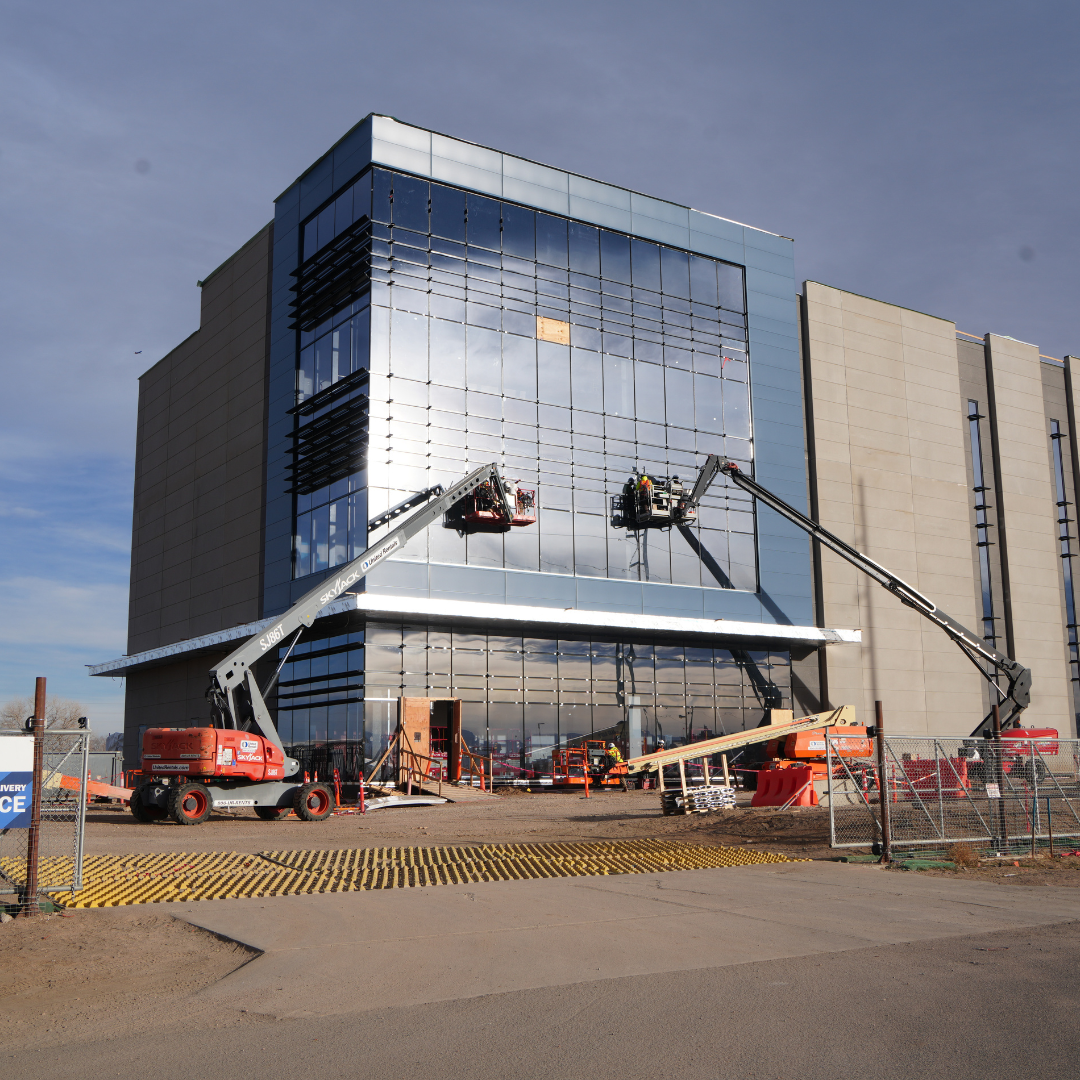
One of the largest data center projects currently under construction in Denver is CoreSite’s DE3 facility at 4900 Race Street in Elyria Swansea.
Phase 1 consists of a 180,000 square foot colocation data center designed for high density computing and interconnection services serving cloud, enterprise and network customers. The initial building is designed for approximately 18 megawatts of critical power capacity and is expected to come online later this year. It is the first purpose built data center constructed in Denver in more than 20 years.
At full buildout, the campus is planned to span roughly 600,000 square feet across three buildings with up to 60 megawatts of total critical power capacity.
To put that into context, an 18 megawatt facility operating continuously would equate to roughly 157,680 megawatt hours annually. A fully built 60 megawatt campus could approach 525,600 megawatt hours per year, assuming near full load operations.
By comparison, many of Colorado’s largest existing data centers are estimated to consume between 12,000 and 22,000 megawatt hours annually. Even the initial 18 megawatt phase at 4900 Race would represent a multiple of that range, while a 60 megawatt campus would mark a significant increase in scale within the state’s existing footprint.
The city’s proposed pause does not affect the project, which is already approved and under construction. Instead, the review appears aimed at how future facilities of similar size and power demand will be evaluated.
Colorado already maintains a substantial data center presence. The question now facing Denver is how additional growth of this magnitude will be structured and regulated moving forward.