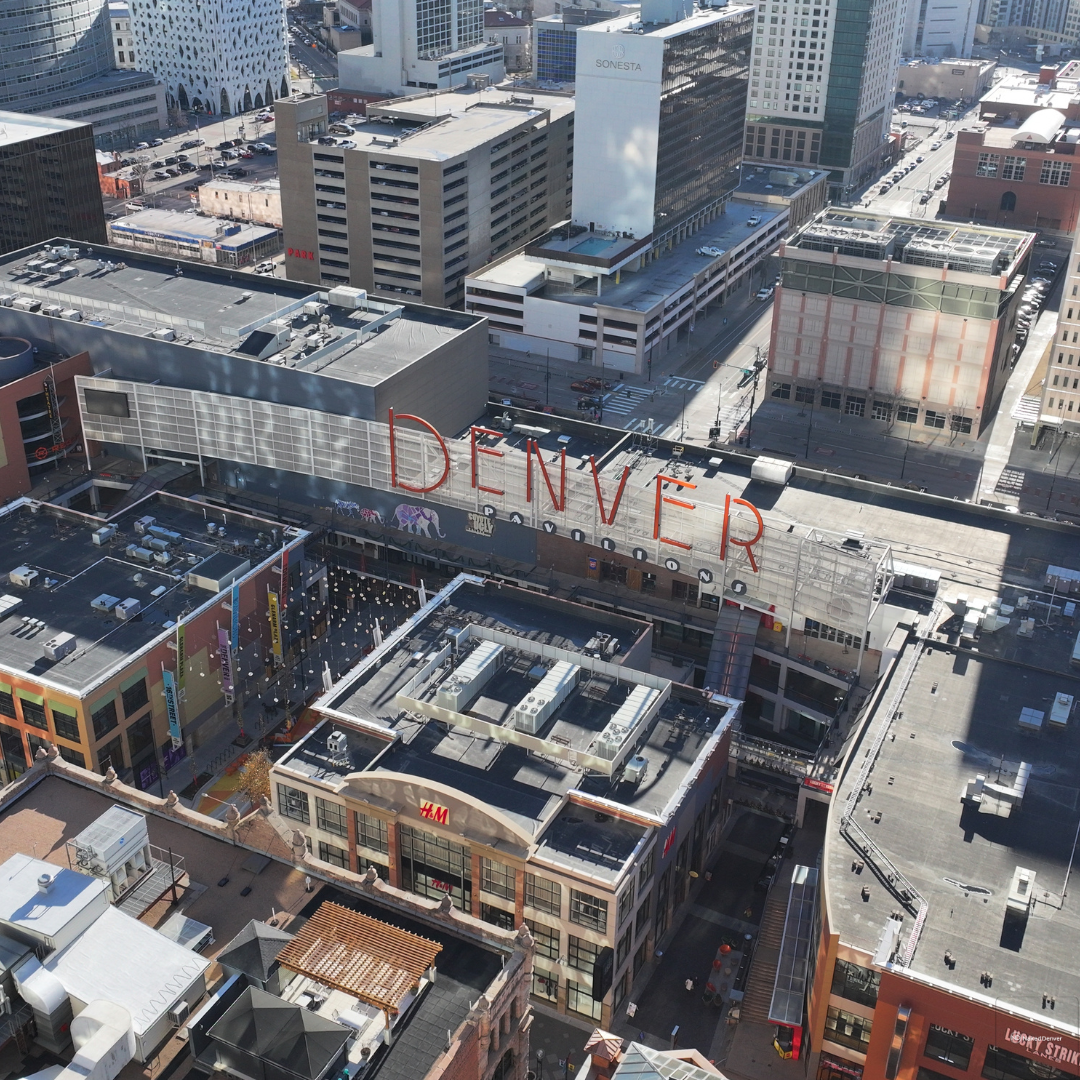
500 W 16th Street
The Denver Downtown Development Authority is done waiting for Denver Pavilions to figure itself out.
Three months after acquiring the 350,000-square-foot open-air mall for $37 million (plus $23 million for the adjacent Glenarm Place parking lots), the DDDA is actively recruiting the team that will define what comes next.
The DDDA is the public financing and development authority funded by voter-approved tax-increment financing. The Downtown Denver Partnership is the nonprofit that manages downtown's business improvement district.
The two work in tandem, with the DDP handling advocacy and programming and the DDDA handling acquisition and redevelopment capital. The authority is seeking architects, urban designers, master planners, retail and entertainment leasing specialists, place-makers, and hospitality leaders to help transform the Pavilions into something the city has never had: a true 24-hour urban destination built around experience rather than traditional retail.
The timing is deliberate. All of this visioning work is designed to feed into a ULI Advisory Services Panel arriving in Denver April 13-17. The panel, which the DDDA is paying $100,000 for, will consist of five or six out-of-region experts who will assess the proposals and produce a formal report with recommendations roughly a month after the visit. That report will shape how the DDDA proceeds with the property, including the eventual sale to a private developer who can execute the redevelopment vision.
The authority has issued two RFPs ahead of the ULI panel visit. One seeks a repositioning vision from top-tier retail, dining, entertainment, and experiential leasing consultants. The second targets architecture, urban design, and master planning firms to reimagine the Pavilions and adjacent parking lots as the centerpiece of a revitalized Upper Downtown.
The Backstory
The DDDA's acquisition of Denver Pavilions in December 2025 was a defensive play as much as a visionary one. Gart Properties, the Denver-based firm that owned the mall, had defaulted on the property's loan. Rather than let the Pavilions fall to a lender in foreclosure, with no guarantee of what would happen next, the DDDA stepped in.
The numbers tell you how far the property had fallen. The purchase price of roughly $37 million was well below the property's estimated $140 million value just a decade ago. The mall is approximately 60% leased and generates $5.3 million in annual rent. The underground parking garage (800 spaces) and the adjacent lots bring in another $3.2 million per year.
The DDDA also set aside $8 million for repairs and leasing commissions. The budget includes $1.75 million for garage repairs in both 2026 and 2027, plus $1 million annually for the escalators and elevators, which have been persistently broken. The property is still managed by Gart Properties under a $379,000 contract, and there is currently no dedicated leasing team.
The Bigger Play
The Pavilions acquisition does not exist in a vacuum. It is part of the DDDA's broader mandate, backed by $570 million in voter-approved funds, to revitalize downtown Denver. The 16th Street renovation is complete. The Downtown Area Plan is moving toward adoption. And the DDDA now controls the Pavilions plus two full surface lots along 15th Street, giving it rare control over an entire block at the heart of Upper Downtown.
The long-range vision goes well beyond refreshing a retail center. The DDDA has talked about converting the surface lots into mixed-use development with residential, office, and hotel components to drive foot traffic. The Pavilions itself is being reimagined as a walkable destination with dynamic public spaces, active storefronts, and a mix of entertainment, service, and cultural offerings.
City leaders have drawn explicit comparisons to Union Station's transformation of Lower Downtown a decade ago. Whether the Pavilions can deliver that kind of catalytic impact for Upper Downtown is the central question the ULI panel will attempt to answer.
What's Next
The ULI Advisory Services Panel visits April 13-17. Their report, expected roughly a month later, will inform the DDDA's next moves. The ultimate goal is to sell the property to a private developer with a clear, community-informed redevelopment vision attached. Bill Mosher, Denver's chief projects officer, has been direct about the DDDA's role as a transitional owner, not a long-term operator.
For anyone in architecture, design, retail strategy, placemaking, or hospitality who wants a seat at the table, the window is open now. Contact Kim Sperry at Sperry Advisory: kim@sperry-advisory.com.