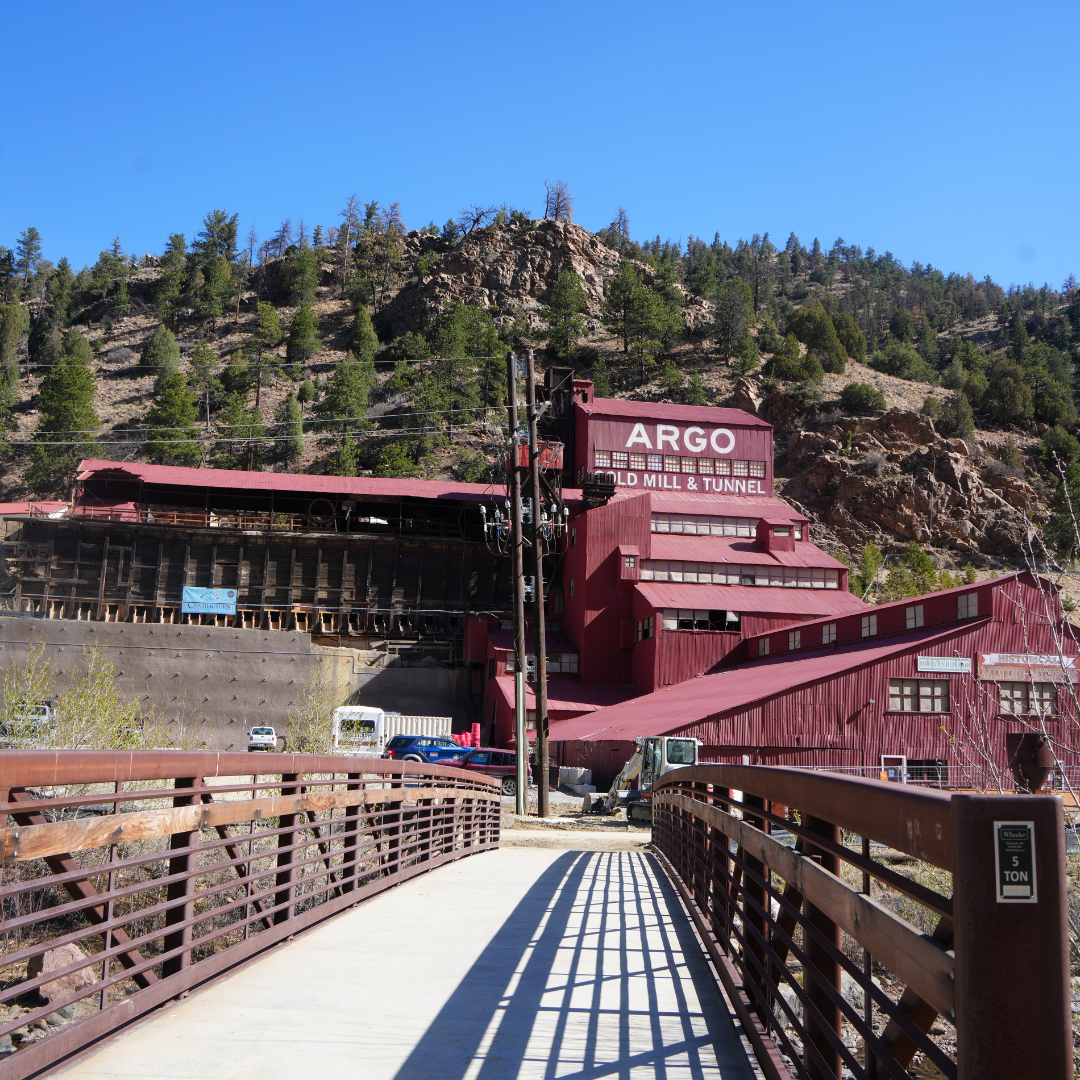
2350 Riverside Drive, Idaho Springs
The Mighty Argo Cable Car is set to open Saturday, May 9, at the base of Idaho Springs' historic Argo Mill, capping more than a decade of planning and a $71 million build that will reshape tourism in the mountain town 30 minutes west of Denver.
The 1.2-mile Doppelmayr gondola will carry riders from the mill yard at 2350 Riverside Drive up 1,300 vertical feet in roughly 10 minutes, terminating at Argo Landing — a mountaintop plaza featuring an amphitheater, viewing decks, and food and beverage space.
From there, passengers will have access to a 400-acre city-owned park and more than 500 acres of hiking and biking trails threaded across the surrounding ridges. The system runs 22 cabins built by Austrian cableway manufacturer Doppelmayr, including five "bike cabs" engineered to carry mountain bikes fully assembled. Project materials describe them as the first bike-dedicated gondola cars in the United States. Several cabins feature glass floors.
The project anchors the long-running redevelopment of the Argo Mill and Tunnel, a 110-foot-tall industrial landmark that processed roughly $100 million in gold ore between its opening in 1913 and the fatal 1943 flood that ended mill operations. Construction of the Argo Tunnel itself began in 1891 and reached its full length in 1910, briefly holding the title of the longest tunnel in the world. The mill has been an EPA Superfund site since 1983 and reopened to tours after a local entrepreneur purchased it in 1976. The historic tour draws about 40,000 visitors a year.
Developer Mary Jane Loevlie, a Clear Creek High School graduate who ran a concrete business with her husband Kristian and began assembling property in Idaho Springs in the 1980s, closed on the mill in 2016 with veteran Denver developer Dana Crawford as a partner. She later recruited 35 investors from the community to help finance the cable car.
The project stalled dramatically in August 2020, when the owners of a title company disappeared with a $4.5 million deposit intended for construction financing. The pandemic compounded the delay. Doppelmayr ultimately backed the project with $23 million from its own development fund, and crews broke ground on July 25, 2024.
The opening lands as Idaho Springs continues a quiet economic transformation. The town of roughly 1,700 residents, 28 miles up Interstate 70 from Denver, has seen its tax revenue triple over the past five years as downtown storefronts fill and outdoor recreation replaces mining as the region's economic engine.
Operators along Miner Street and Riverside Drive — restaurants, outfitters, and lodging are preparing for a summer expected to bring significantly higher visitation, and the cable car's bike-cab infrastructure is positioned to draw a mountain biking clientele that has largely bypassed the town for Summit and Eagle counties.
Opening-day hours run from 10 a.m. to 5 p.m., with unlimited rides included in adult admission. Whether the Mighty Argo ultimately delivers the tourism lift its backers have promised, its arrival represents the most ambitious adaptive reuse project Clear Creek County has seen in decades and the clearest signal yet that Idaho Springs' next chapter will be written above ground.